Cosplaying Cheer & the Costs of Bypassing

Being a patient is a wild and humbling experience. But for many, the experience has a start and end date– an incident happens, your body breaks, the doctors help you heal and regain control of your body, you return to life with a story and a different perspective.
But for many others, there is no clean narrative to restoration on the other side of the broken body. The body will stay broken and the person must learn to navigate a system designed to colonize their body in order to seek restoration or at least give the medical system enough control to find solutions. Necessary, but colonizing none the less.
For those who fall into this chronic side of illness or pain, everything changes. There is no normal to return to and they must learn how to maintain their own sense of control in a body they no longer fully understand.
Beyond the medical tools and protocols to try and rebuild the body or maintain enough repair so the human can function among the Able again, the patient and the ones who surround them must learn to embrace the deep emotions of situations without clear and/or hopeful endings. As a soceity, we are not equipped for this.
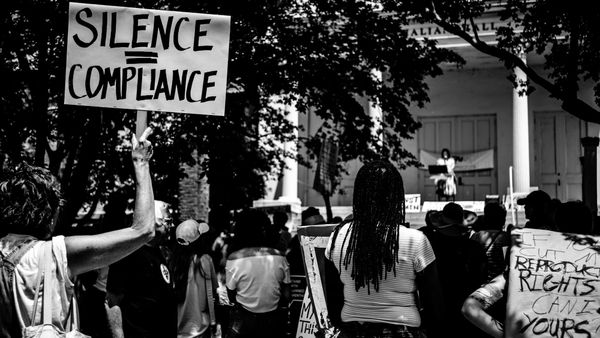
At a very young age, we are trained to be “good citizens”, we are ranked in school systems by our compliance, obedience and submission. We are labeled as successful laborers and climb the corporate ladders by taking those same skills and applying them to professional settings, keeping our true feelings and emotions hidden under smiles and niceties. Here’s where that whole compliance architecture gets turned on its head.
When a person enters the realms of chronic pain or serious illness, the care providers– professionals, friends, and family, will often celebrate and further support the “cheerful patient”. People expect the sick person to “live their life to the fullest”, “put on a happy face”, “keep hope alive”, “suffer stoically in silence and strength” – on and on it goes. It’s human nature to seek to avoid or bypass all together the emotional topics that swirl around broken bodies.
Who wants to talk about pain, treatments and death? Who wants to sit and bear witness to someone’s despair and anger at a body that took a detour and might never return to the highway again? Who has the inner strength and capacity to do so?
But here’s the thing, the patient or person suffering needs to be fully seen and witnessed by the ones they love and turn to for support. Their dear friends and family. The energy of wearing the Mask of the Able, of appearing cheerful and calm when the pain is pulsating through a nervous system gone awry and a body gone rogue is simply energy that person can not spare.
And denying that person the depth of their emotional landscape because you need to feel OK, you can’t face the reality of life and death and can not bear witness to that person’s pain is YOUR problem, not theirs. It is not the patient's job to make you feel better by putting on the strong facade. That only causes more pain and suffering through the bypassing of their real experience.
Ram Dass talks about this in his many lectures on death and dying. When we deny sick people the ability to express the rage and anger at the reality on the horizon, especially when the reality is clear and the transition from this physical body has a clear experation date, we’re also denying them the dignity of the transition itself.
If the afflictive emotions are perpetually hidden under the cosplaying of cheerfulness to protect caregivers, friends and family, those emotions will most likely only surface at the end, when love, compassion and acceptance should be holding everyone in the room. The transition to another plane of existence will be mired by rage and denial instead of embraced with the love and care the person needs to release their grasp on the body that can no longer carry them.
My situation doesn’t have the gravity of death on the horizon, but it does carry the knowledge of deterioration, pain and chaos that is unpredictable and part of my daily life. Each day is a mystery when I wake up. Will I spend the day navigating some wild ass pain and neurological spirals? Will I spend the day with pain in the background and living my life as I always have– just a little slower and with more gratitude? Or will the entire day be lost to a cloud of pain and the meds that have to catch it and toss my brain into a sea of fog for as long as it takes to find stasis again? My new normal is this– I never know which day I’m waking up to and I experience all of those days in a week’s time.
But I have been working with afflictive emotions for decades and I’m very much a “live in the present” kind of person anyway. I also live alone and have no direct caregivers sharing a roof with me. There’s no one in my home but my dog to bear witness to the daily circus I live within now. There are only my dear friends and some family who mostly bear witness from a distance. And even at the distance, some choose not to see me at all. They only see the “cheerful patient” and do not have the capacity or ability to have any conversation other than their normal “here’s what I did today, what did you do?” Any mention of my reality and the topic changes to something without emotion or meaning. It’s easier for me to go silent and disengage than pretend everything is fine.
I know why my phone is more silent now. I know that the chasm caused by not being able to hop a plane at the moment or drive to the next town, is an issue in my personal relationships. I know the cost of not cosplaying the cheerful patient and I am paying that cost now.
But I also know that I am beyond grateful for the ones who do show up. The ones who let me blow up their phone when my rage seeps out of my journal and into my every thought. The ones who pop by when the loneliness of navigating pain chaos alone is too much and I just want to gossip over tea. The ones who meet me in the middle so we can co-regulate and I can pretend for an afternoon that not all of my past life has been lost and that this new one will still hold the containers I value most in this world.
Containers that hold deep conversation, connection and soul-level love. I draw a deep sense of hope and strength from the simple acts of Love as a Verb that are present in my life because the humans close to me have done the hard work on themselves and can sit with ALL of our human layers, not just the cheerful, pleasant ones.
I am also fully aware of how worse many other people’s situations truly are. Part of my journey through this chapter is not only learning to bear witness to my body and and find communion through the expression of suffering but also engaging with the medical narratives of others. And those narratives contain the full scope of human emotion. I have people I love dearly who are facing their final chapters right now, and much earlier than they anticipated. I also read medical narratives that hold a depth of human experience I can hardly grasp. I witness their stories and am reminded of how lucky I am. It could always be worse. And I could always be more alone and isolated then I actually am.
As a documentarian, my life’s work has been to bear witness to suffering and find the narratives in that pain to share with others to create connection and understanding. This period is no different, only the methods of documentation have changed.
So, I guess I’ll leave you with the following– if you have someone in your life struggling through a complex health issue right now, just let them know you see them. Give them the space to be vulnerable and express the hard emotions – the rage, anger, grief and despair. You don’t have to fix them or tell them it will all be ok. That’s not what they want or need.
Simply say, “I see you. Keep going. I’ll be here.” Let them grieve and hold space for the tears– even if the person sheds those tears in private.
That’s enough. That right there– is everything.
This essay was written organically from my daily field notes for A Somatic Unraveling: Field Notes from the Cremation Grounds a creative writing project helping me write my new Quest Narrative and find a way through the pain towards...whatever comes next.
I'm publishing the companion data from my HealingOS on Github. I'm also scanning the 22+ year archive of my raw, organic writing for patterns using my cstreetOS.
Please share this work with someone who is also navigating the world of chronic illness and pain– as a patient or caregiver. And tell them you see them. ;)